
Conveyor Systems & Material Handling Solutions
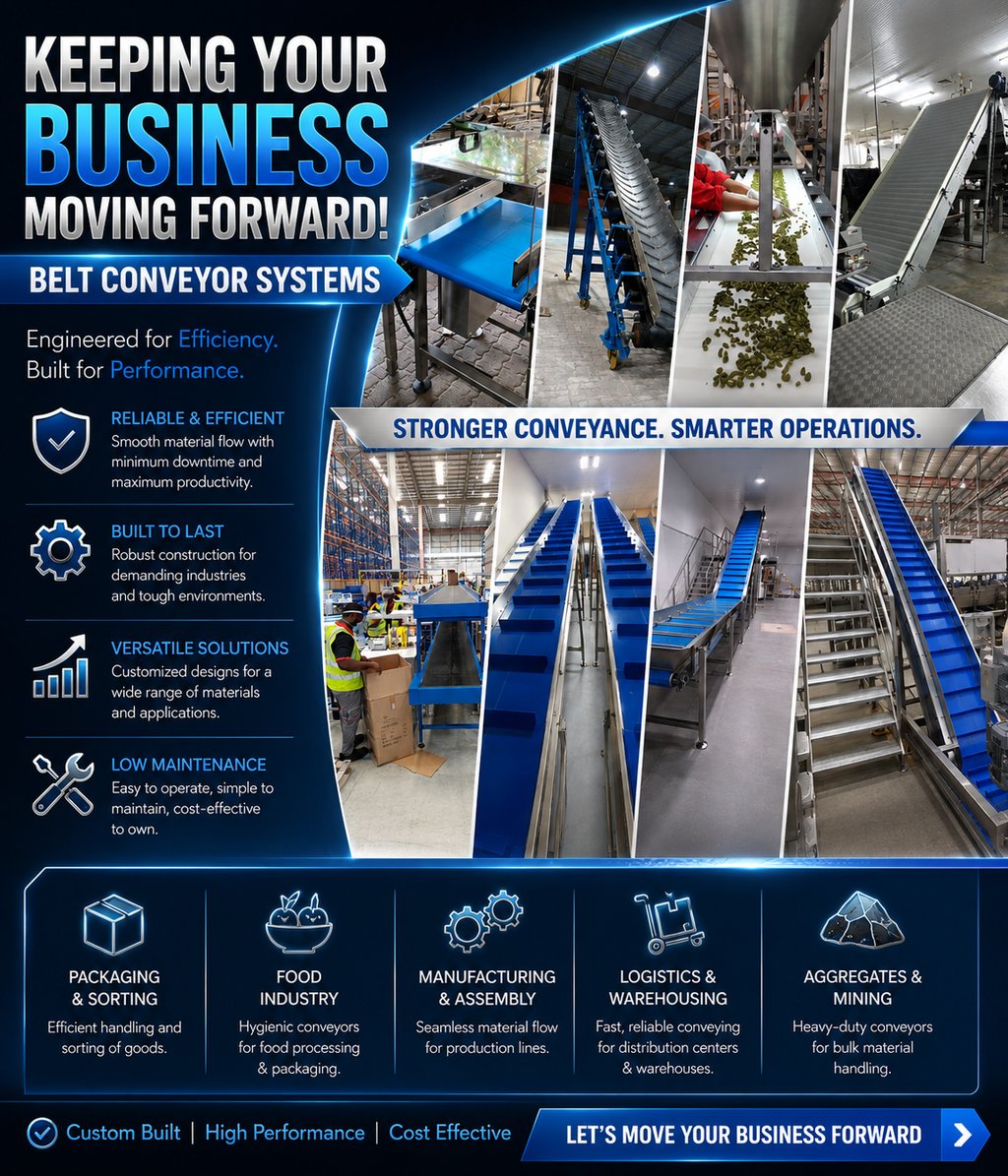
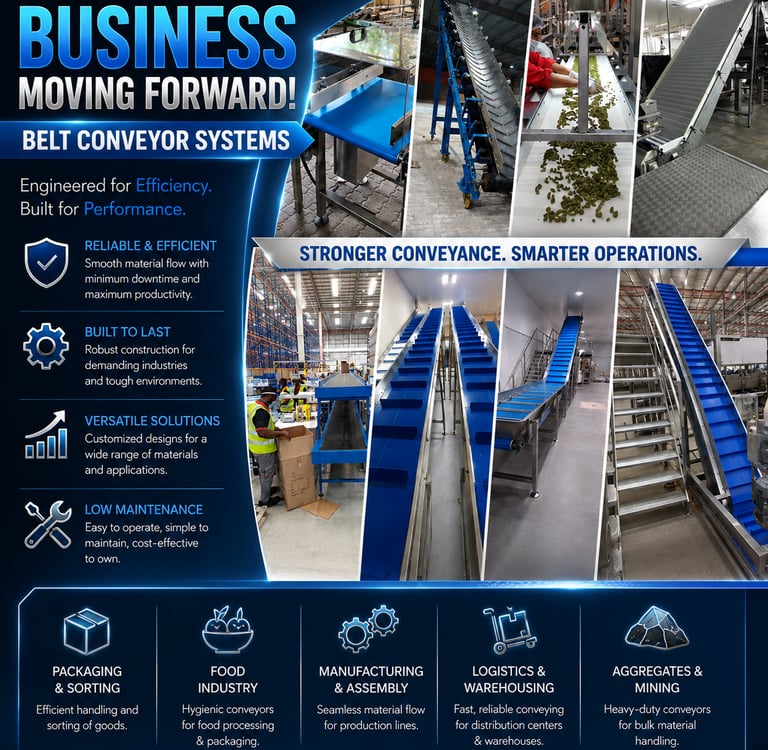
Belt Conveyor System
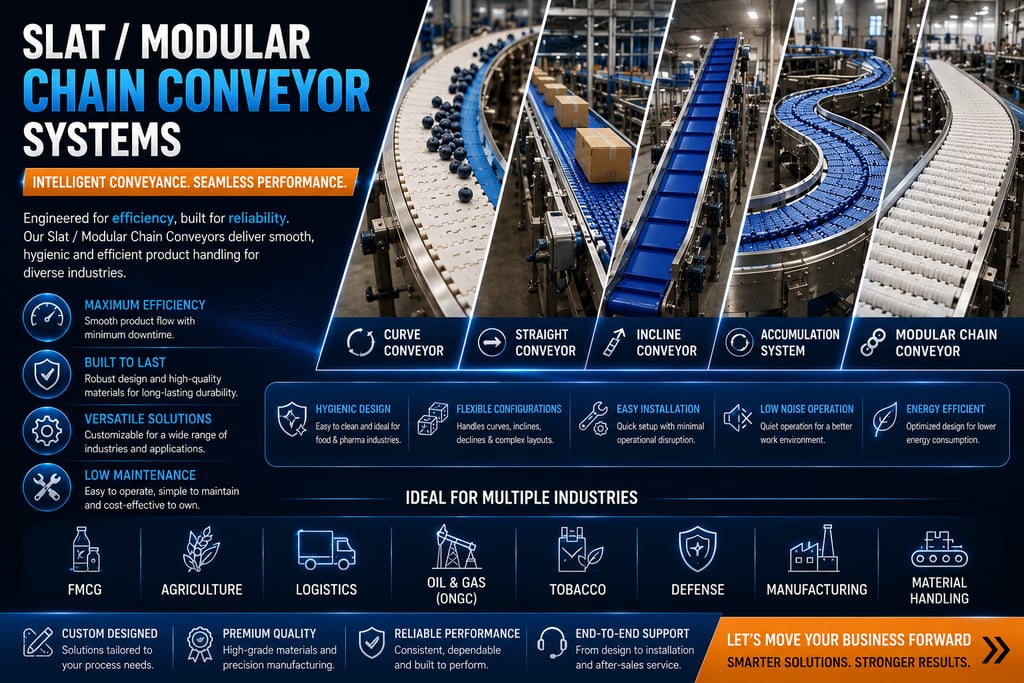
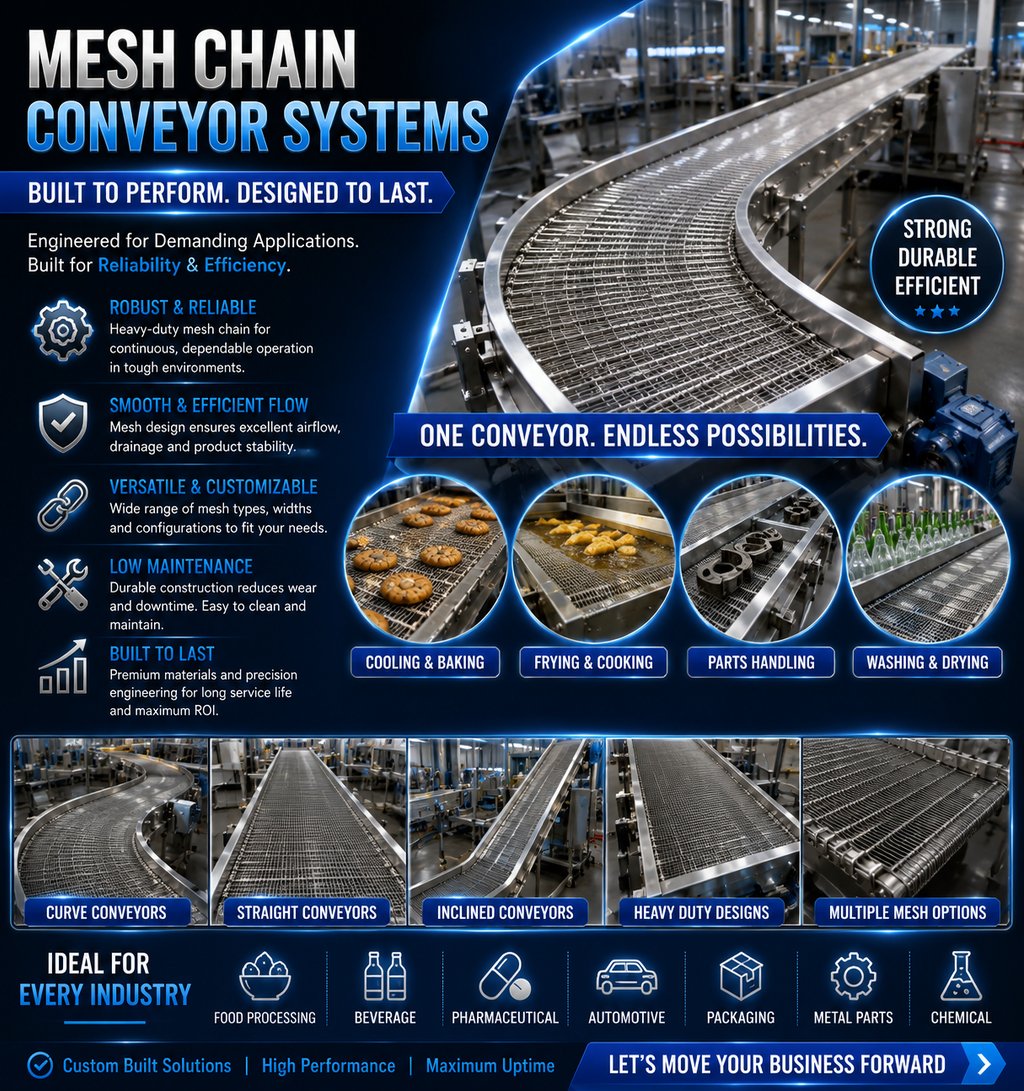
Slat / Modular chain conveyor system
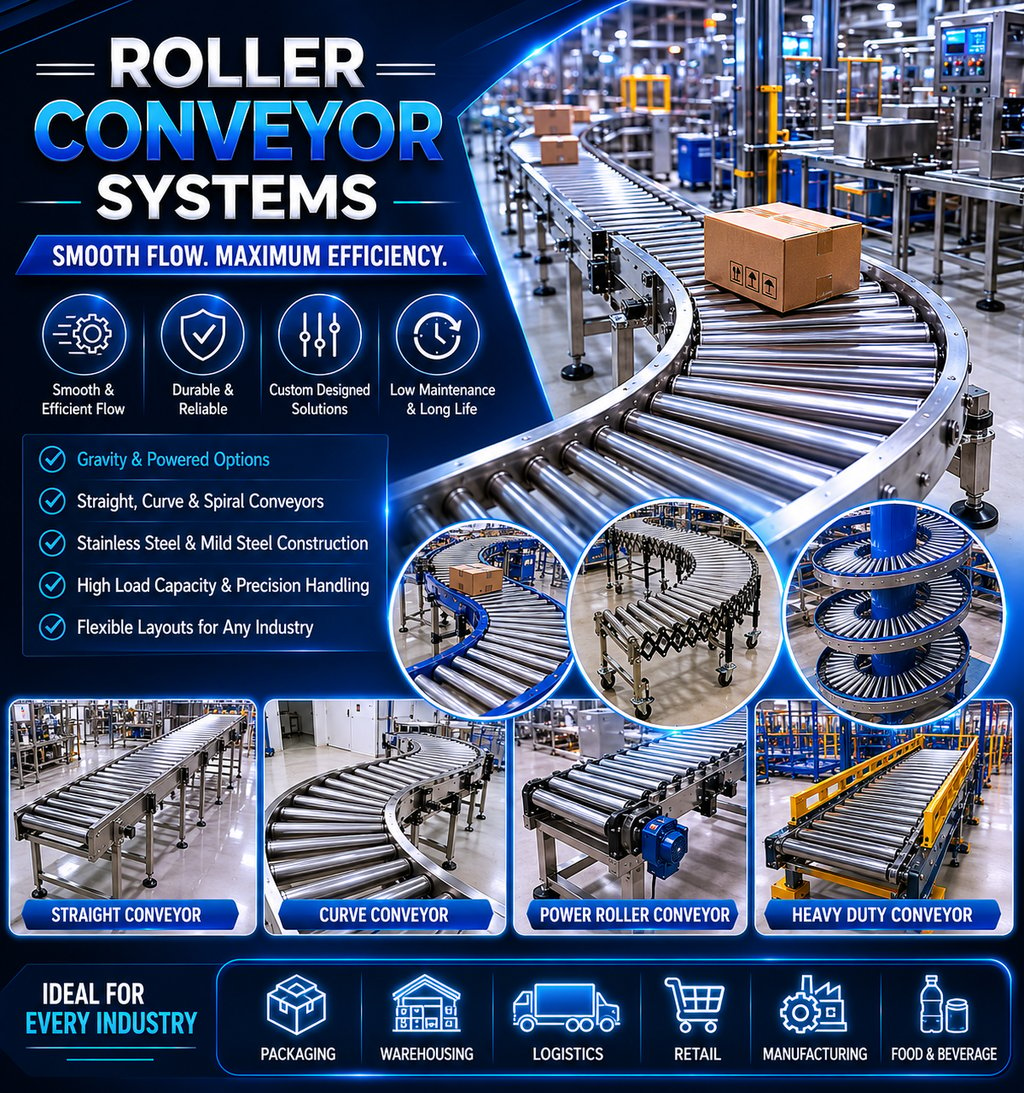
Roller conveyor system
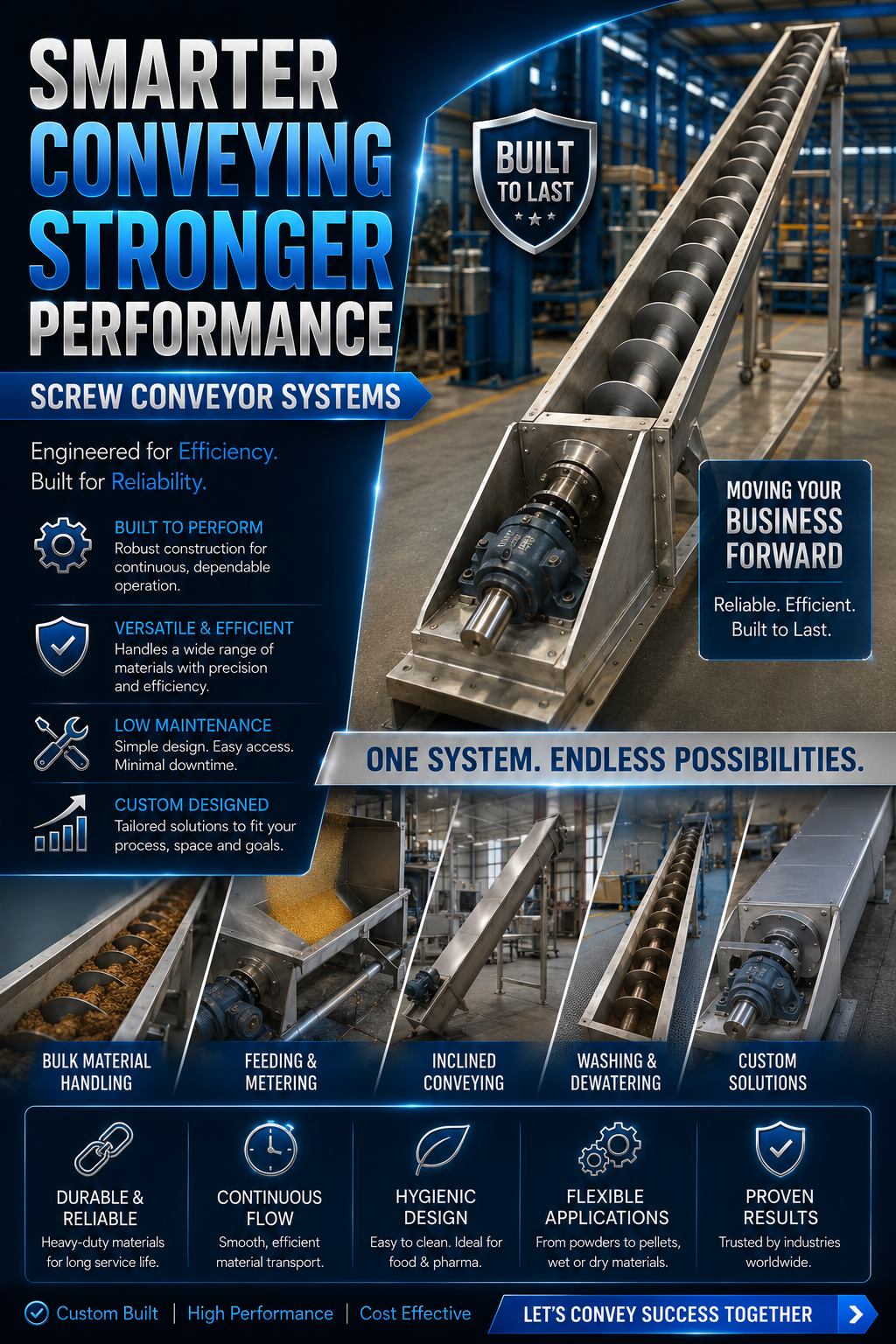
Screw conveyor system
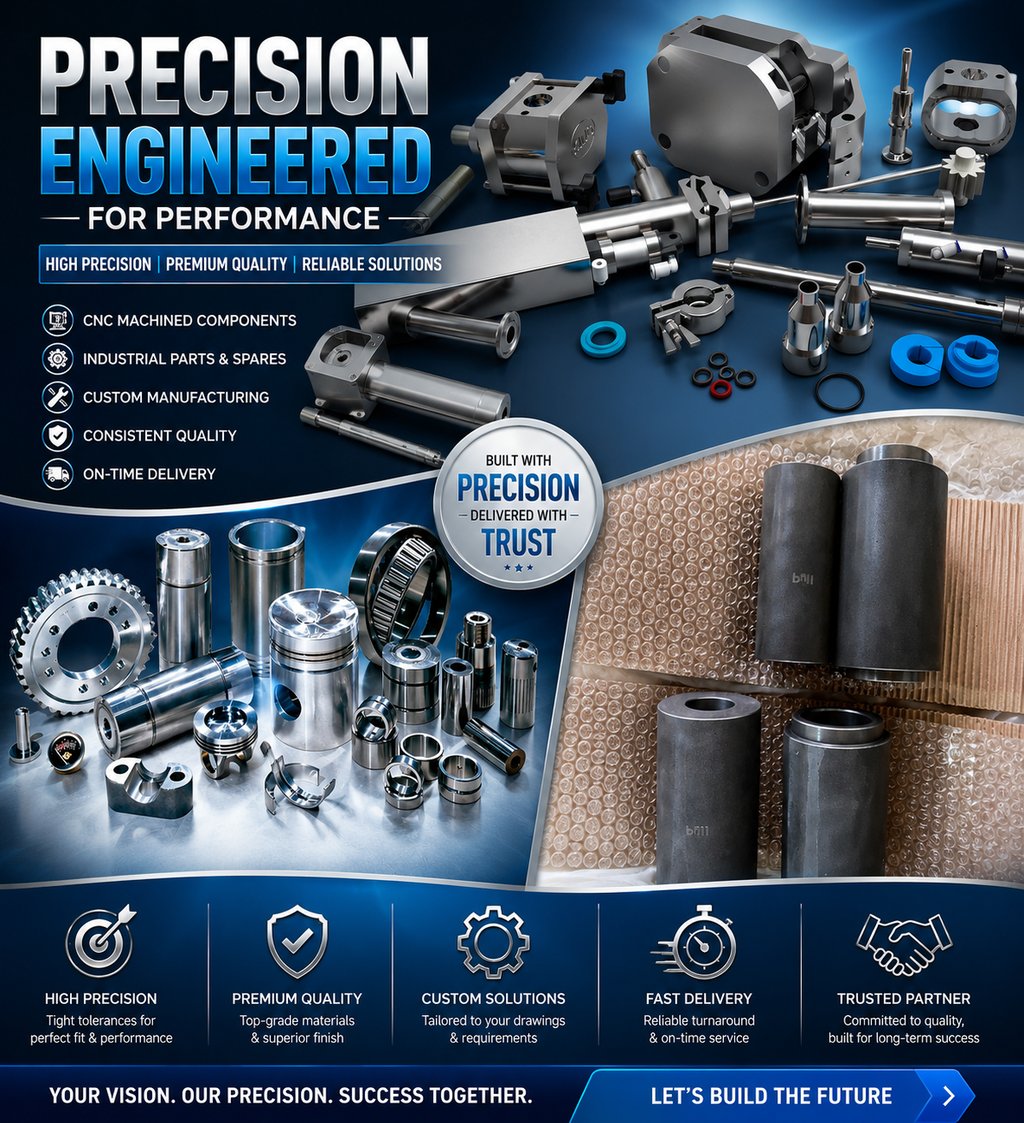
Mechanical Engineering & Steel Fabrication
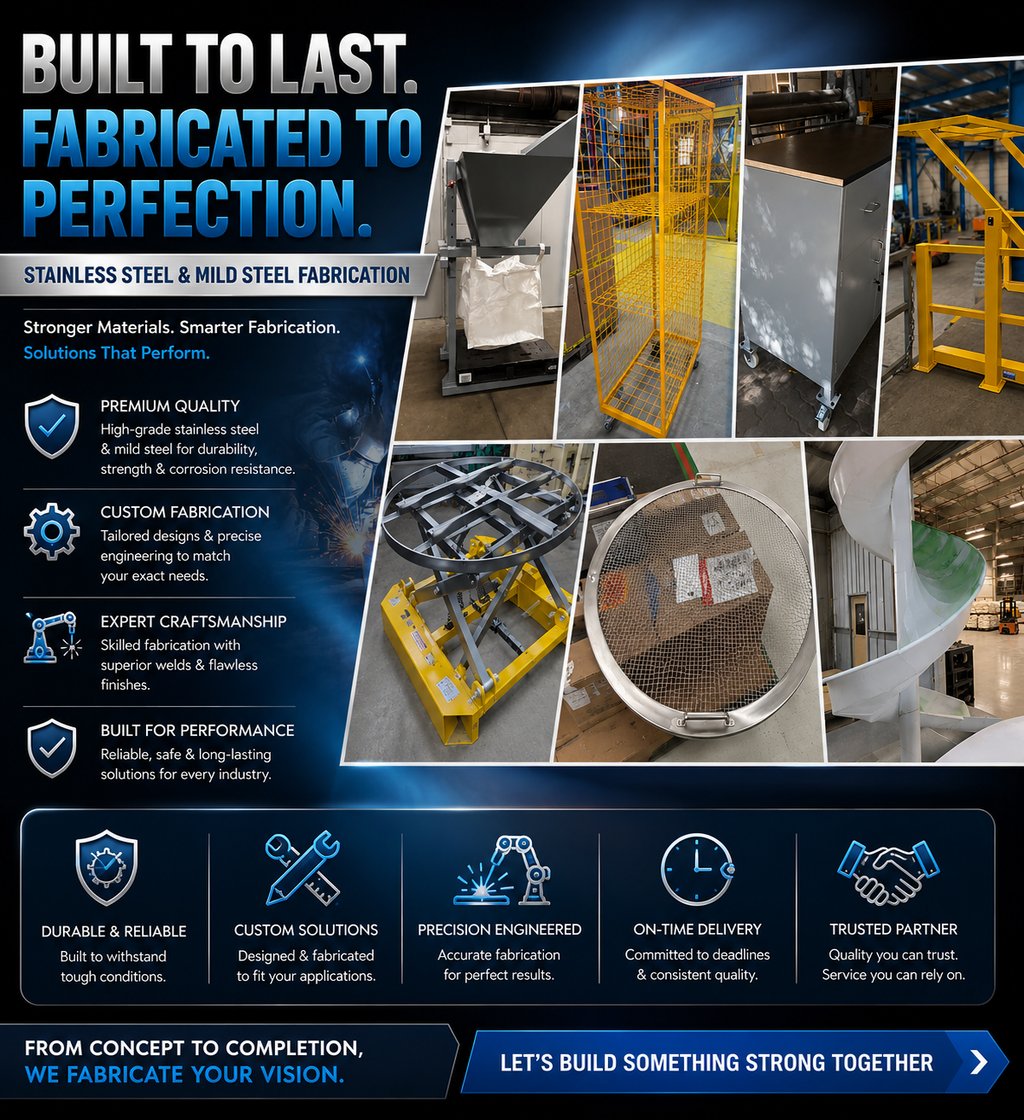
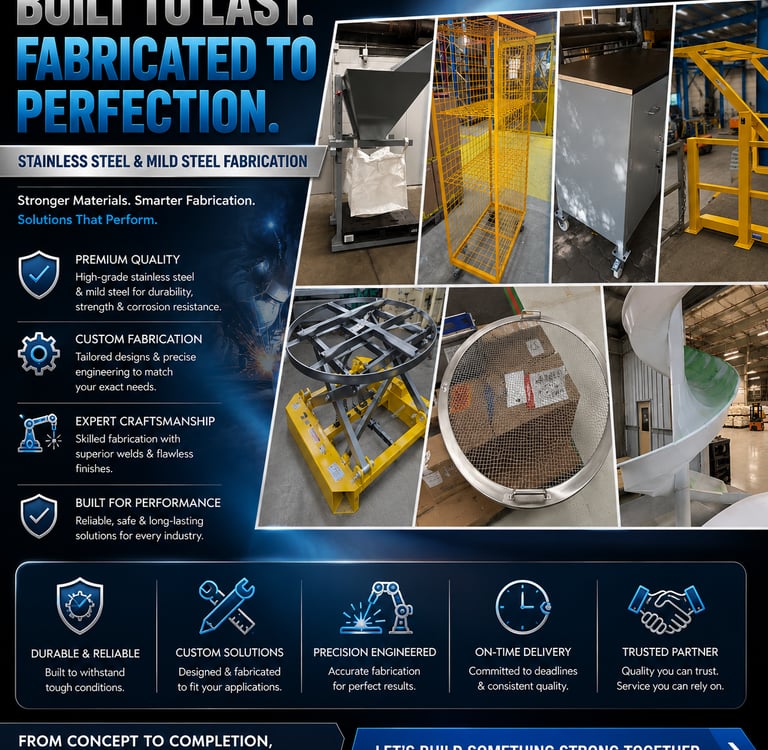
Stainless Steel & Mild Steel Fabrication
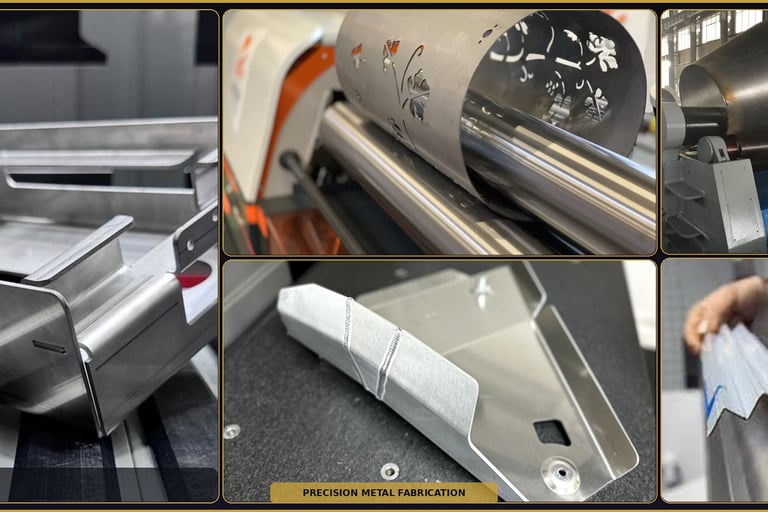
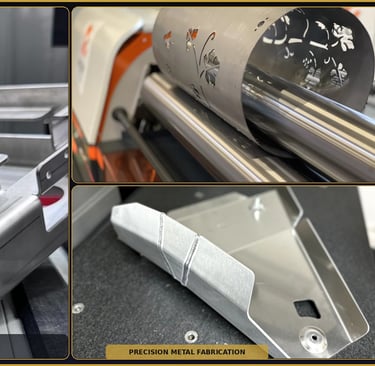
Precision Metal Rolling & Bending
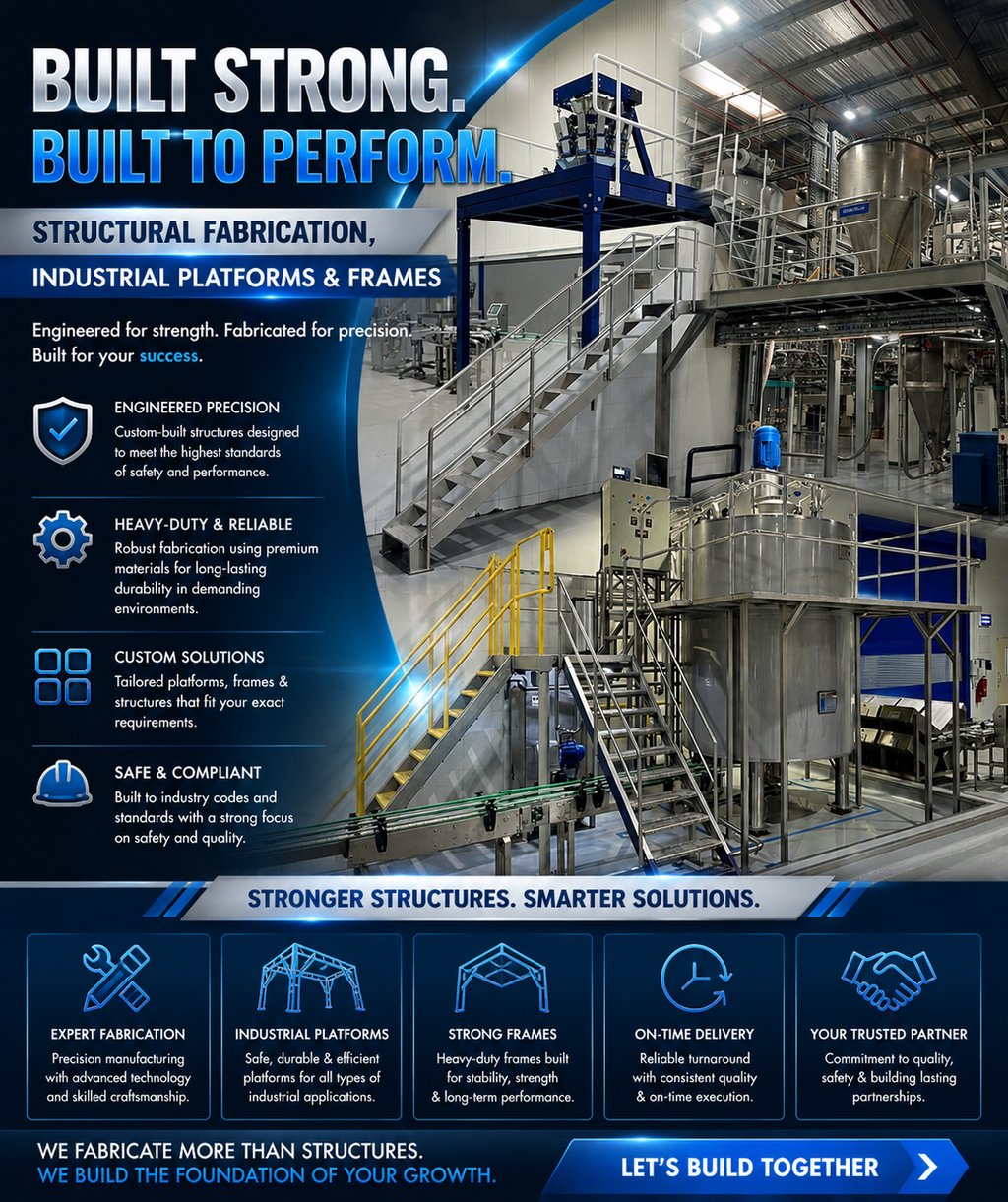
Structural Fabrication & Industrial Platforms
Engineering Services
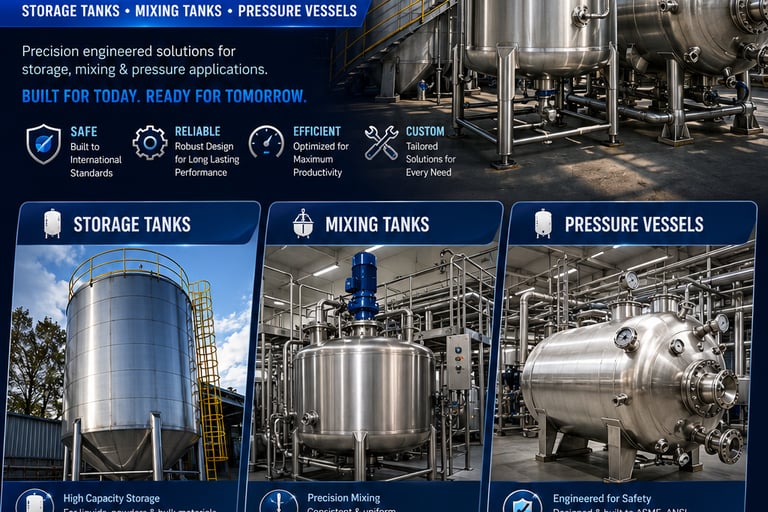
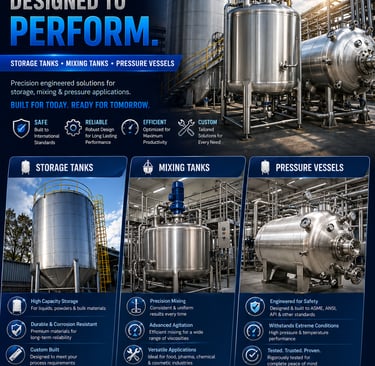
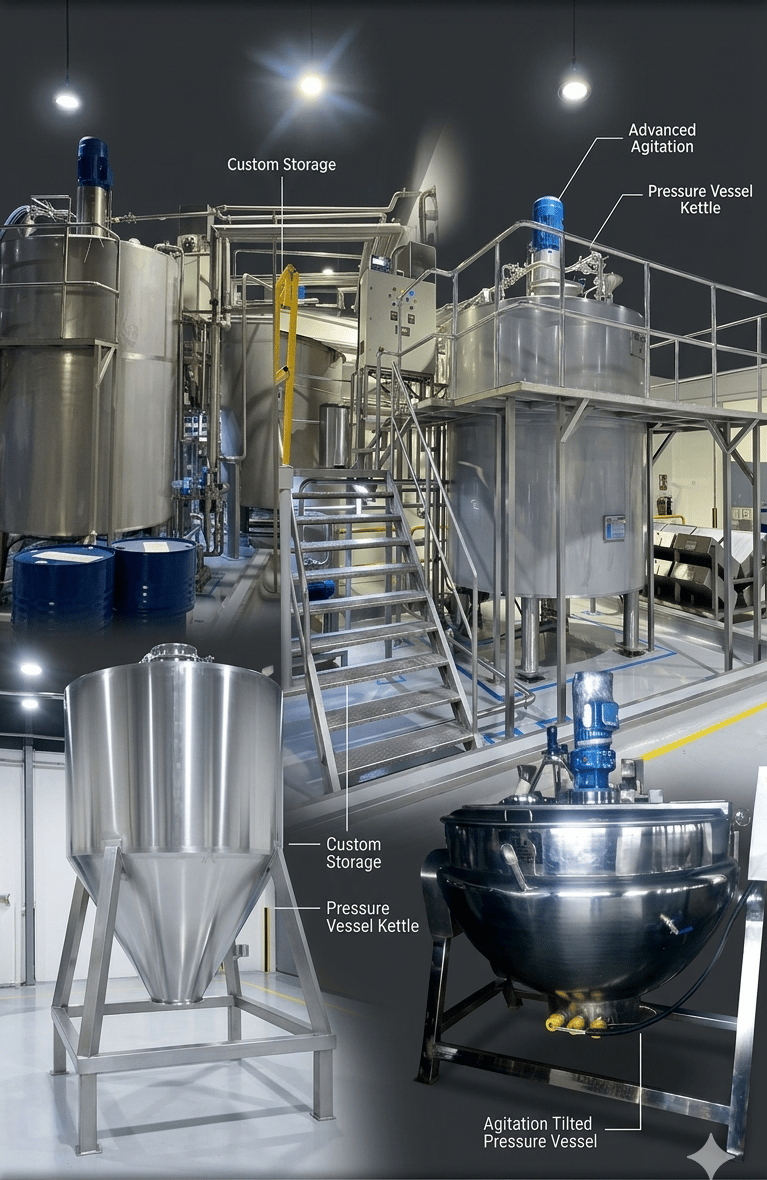
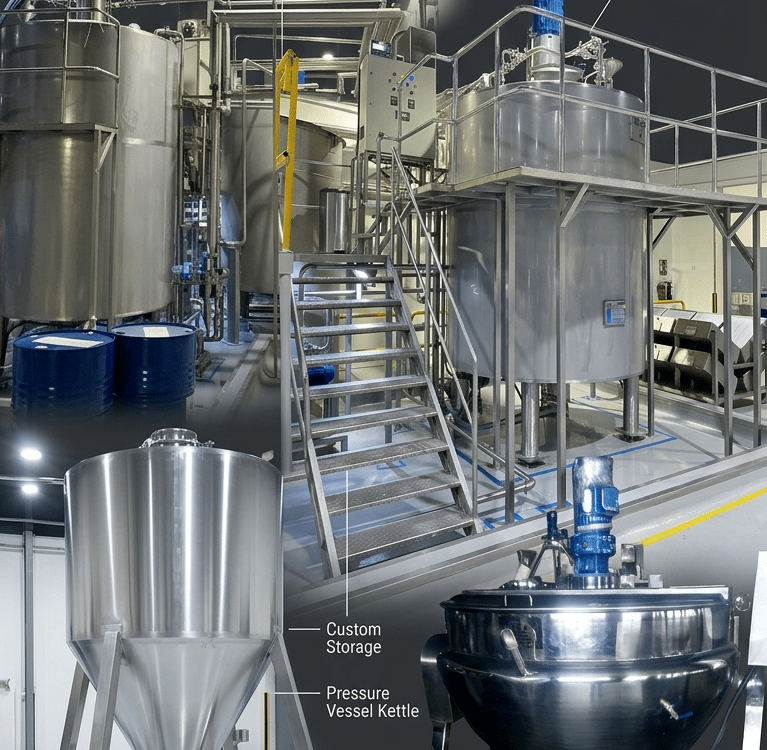
Process Tanks & Pressure Vessels
Custom Machine Fabrication
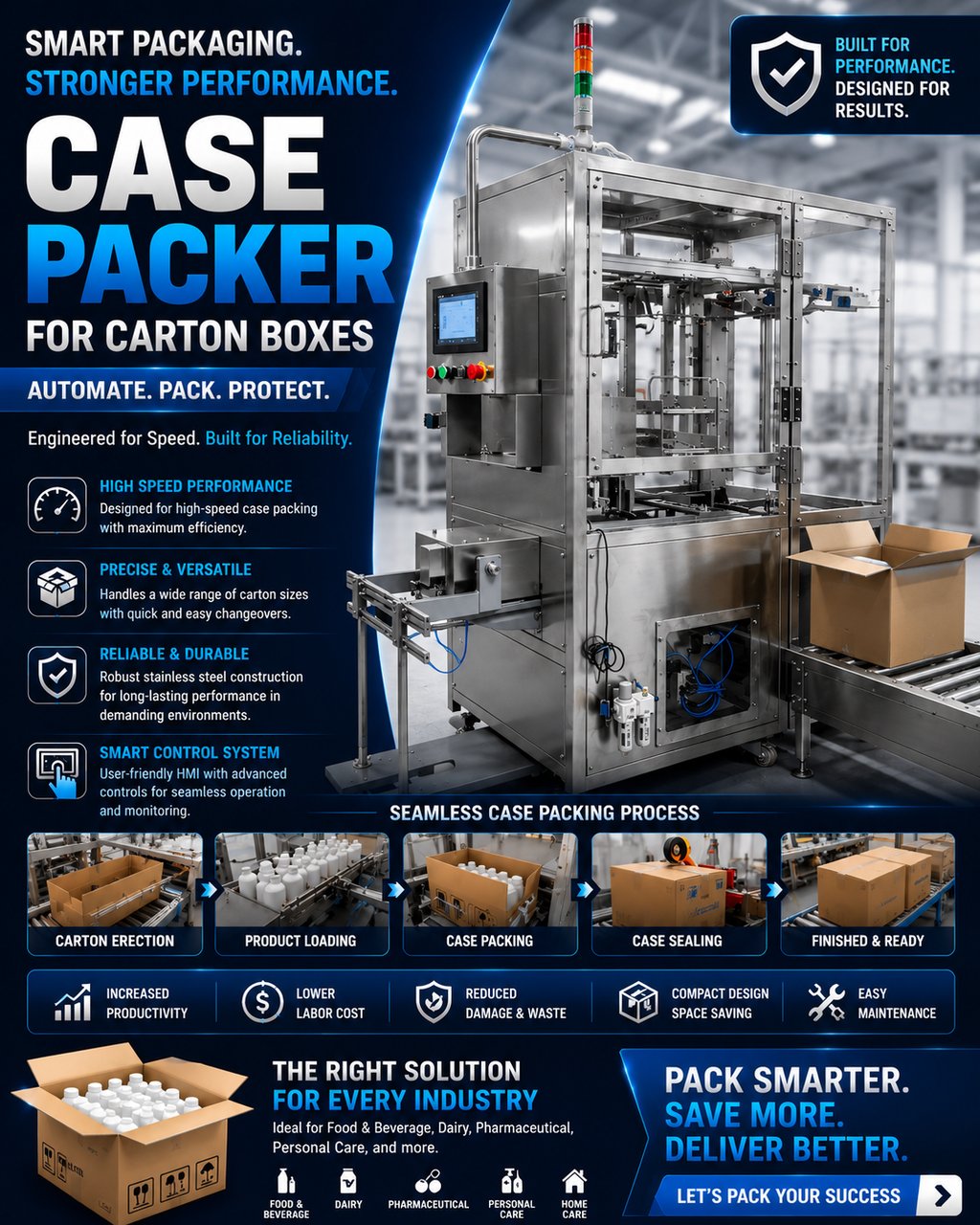
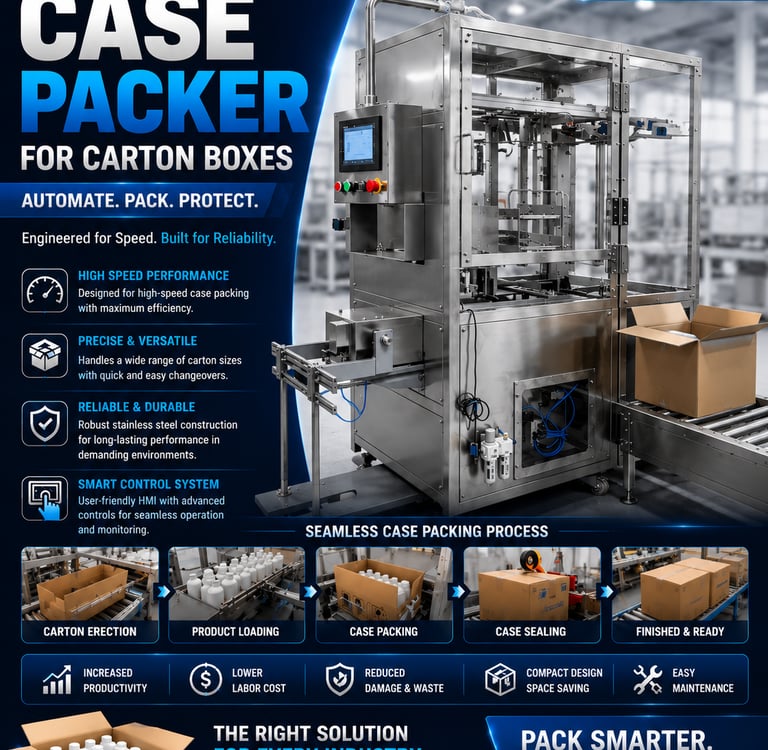
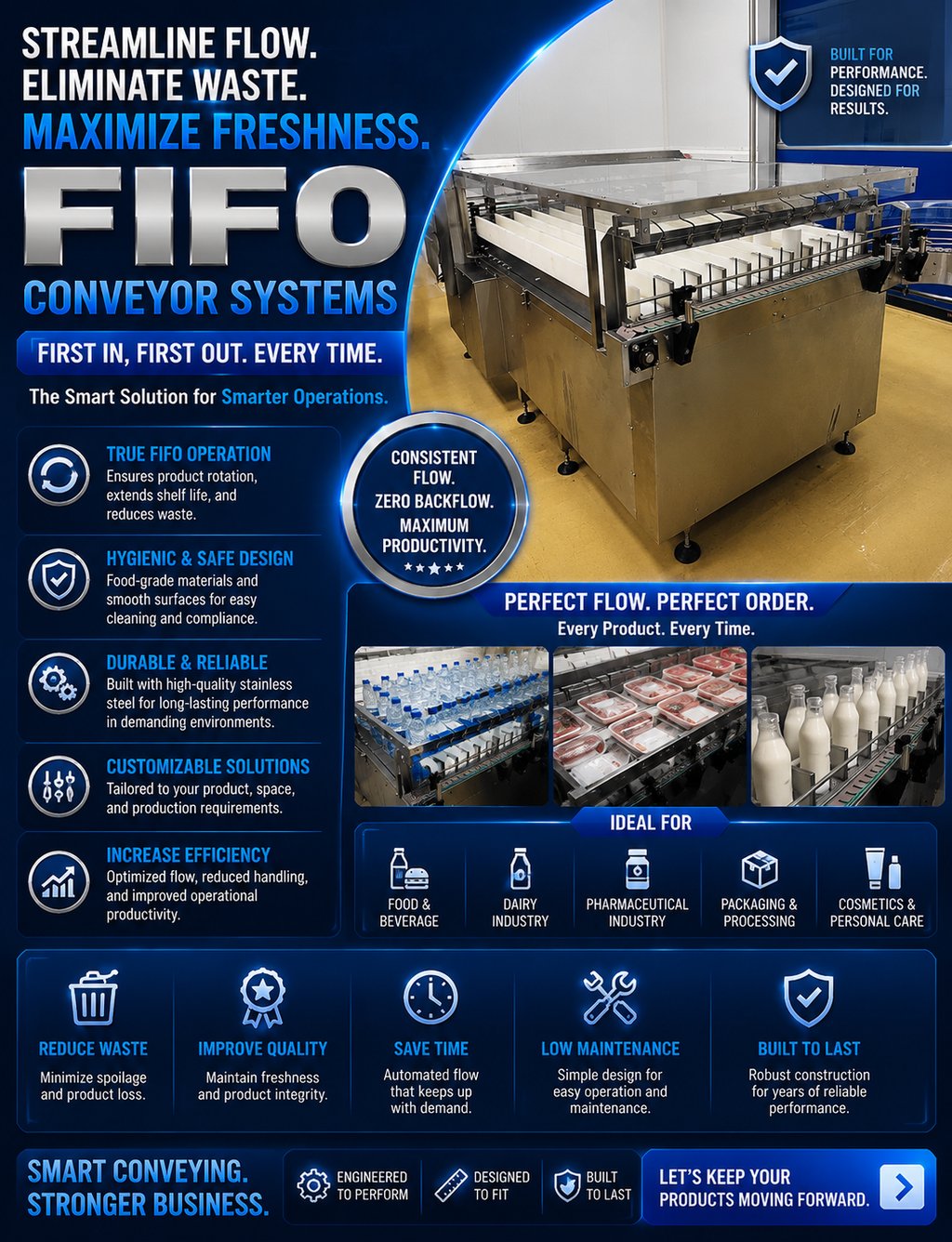
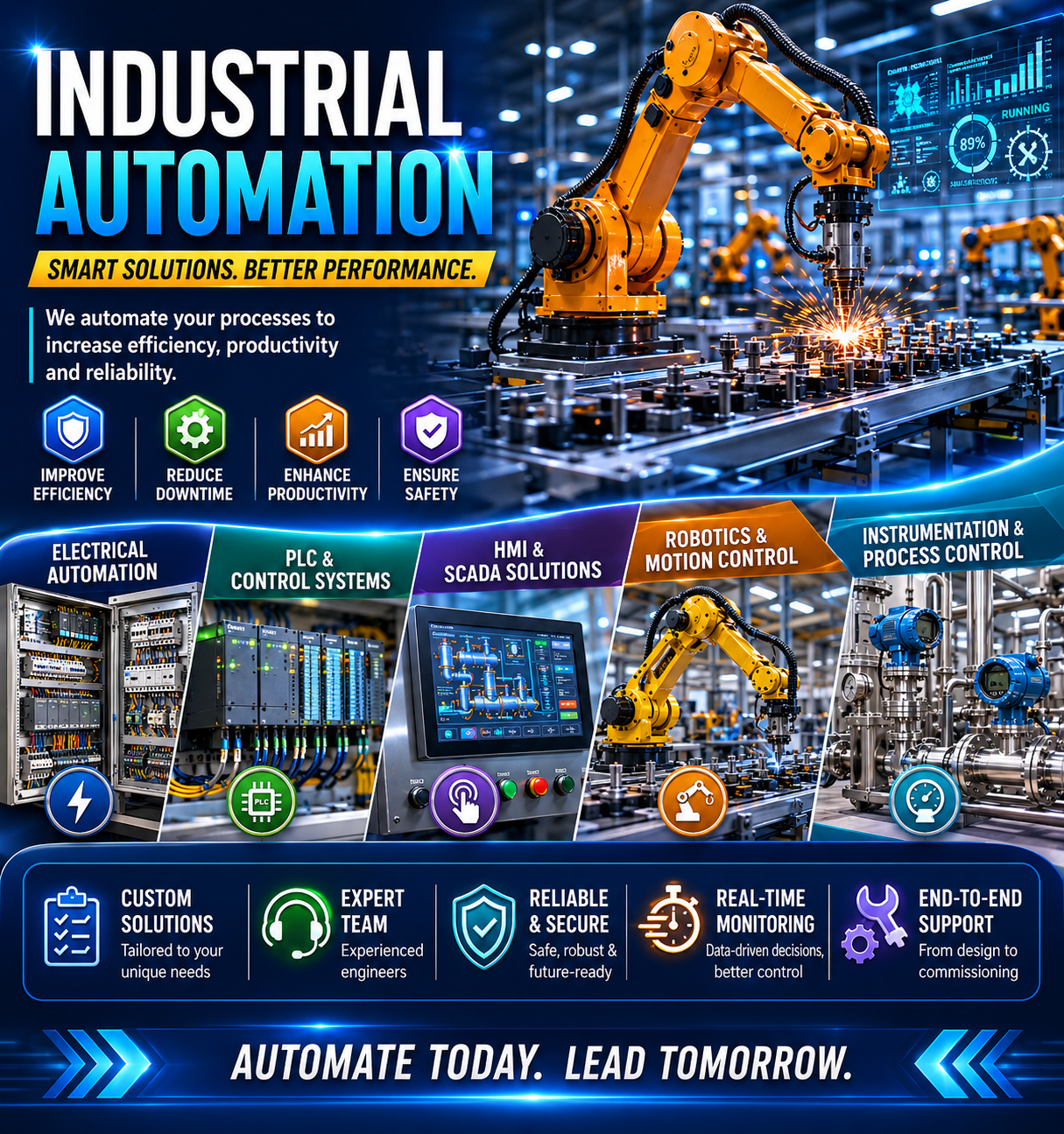
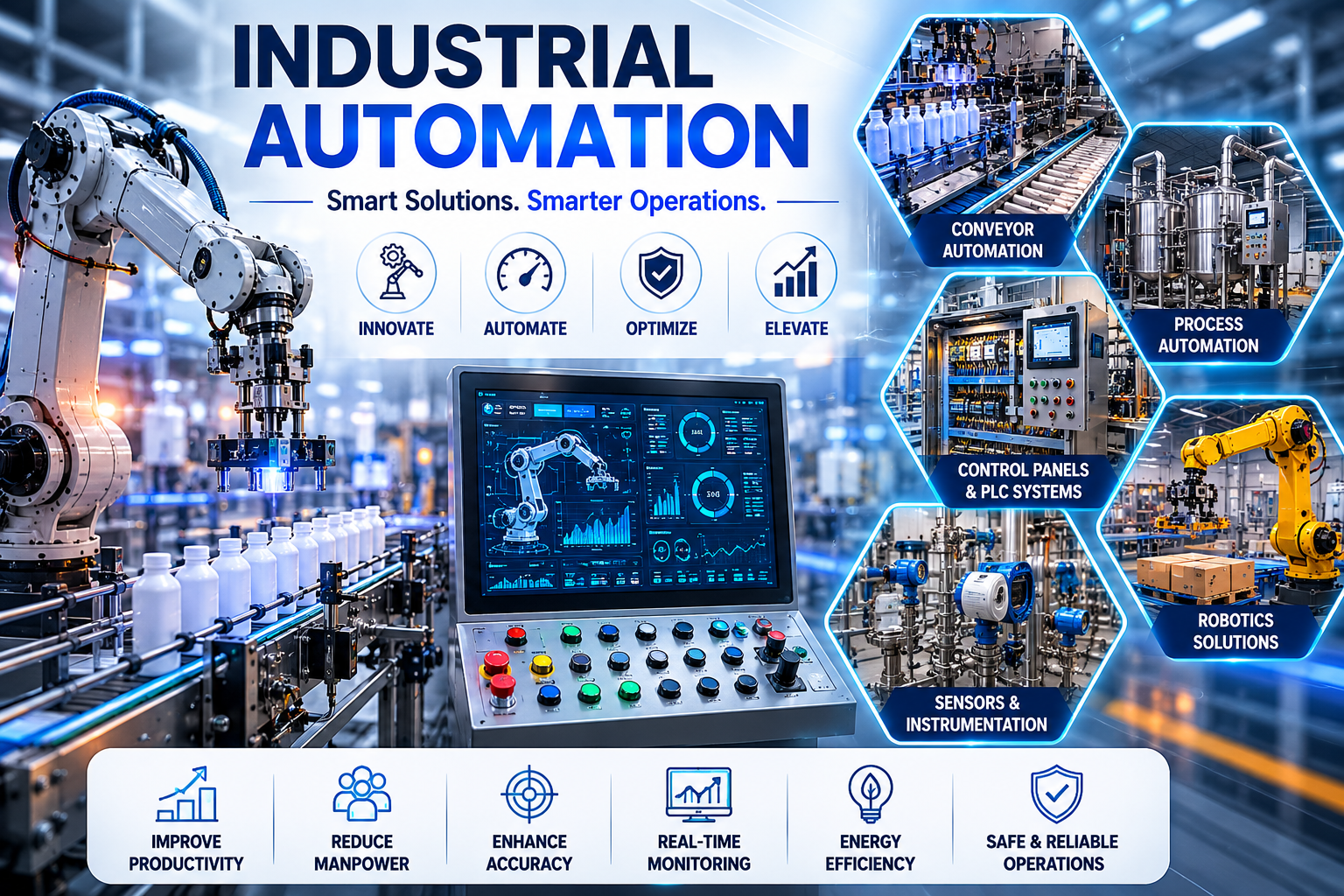
Industrial Automation
+ SECTORS WE SERVE
Industries We Power
FMCG
High-speed packaging, conveying, and production line automation for consumer goods manufacturers.
From fast-moving consumer goods to defense-grade systems, our engineering expertise spans the most demanding sectors worldwide
Agriculture
Logistics
Oil & Gas (ONGC)
Grain handling, processing equipment, and automated storage systems for agricultural operations.
Warehouse automation, sortation systems, and intelligent distribution center solutions.
Robust mechanical and process engineering solutions for upstream, midstream, and downstream operations.
Tobacco
High-speed packaging, conveying, and production line automation for consumer goods manufacturers.
Defense
Manufacturing
Material Handling
Precision-engineered, high-reliability mechanical systems meeting stringent defense specifications.
Factory automation, tooling, and production optimization for discrete manufacturers of all scales.
End-to-end material flow: conveyors, cranes, hoists, and automated guided vehicle systems.







SFS Convonexa Technical Services L.L.C
Engineering Inquiries
(C) 2026 SFS Convonexa-Constraint-driven design. Every installation, every time.
Dubai- UAQ- Sharjah